
How North Korea Launders the Binance Hack
I reported on how $6.3 billion was stolen from Binance. If you missed it, here’s the short version: starting October 29, hackers took the largest haul in recorded history from the world’s biggest crypto exchange, and two days later the FBI named North Korea’s TraderTraitor group as the crew behind it.
This is part two, because stealing the money turns out to be the easy part. Spending it is harder, and the way the thieves are cleaning it up is worth five minutes of your time.
Who Has the Money
Elliptic is a firm that tracks stolen crypto for a living, and its analysts have tied the laundering to TraderTraitor, a hacking group linked to North Korea. These are the people investigators call when they need to follow money across a blockchain. A blockchain is a public record, so every transfer leaves a footprint anyone can look up. That’s a real headache for a thief, because the money is stolen and everybody can see exactly where it’s sitting.
The New Trick, Minus the Jargon
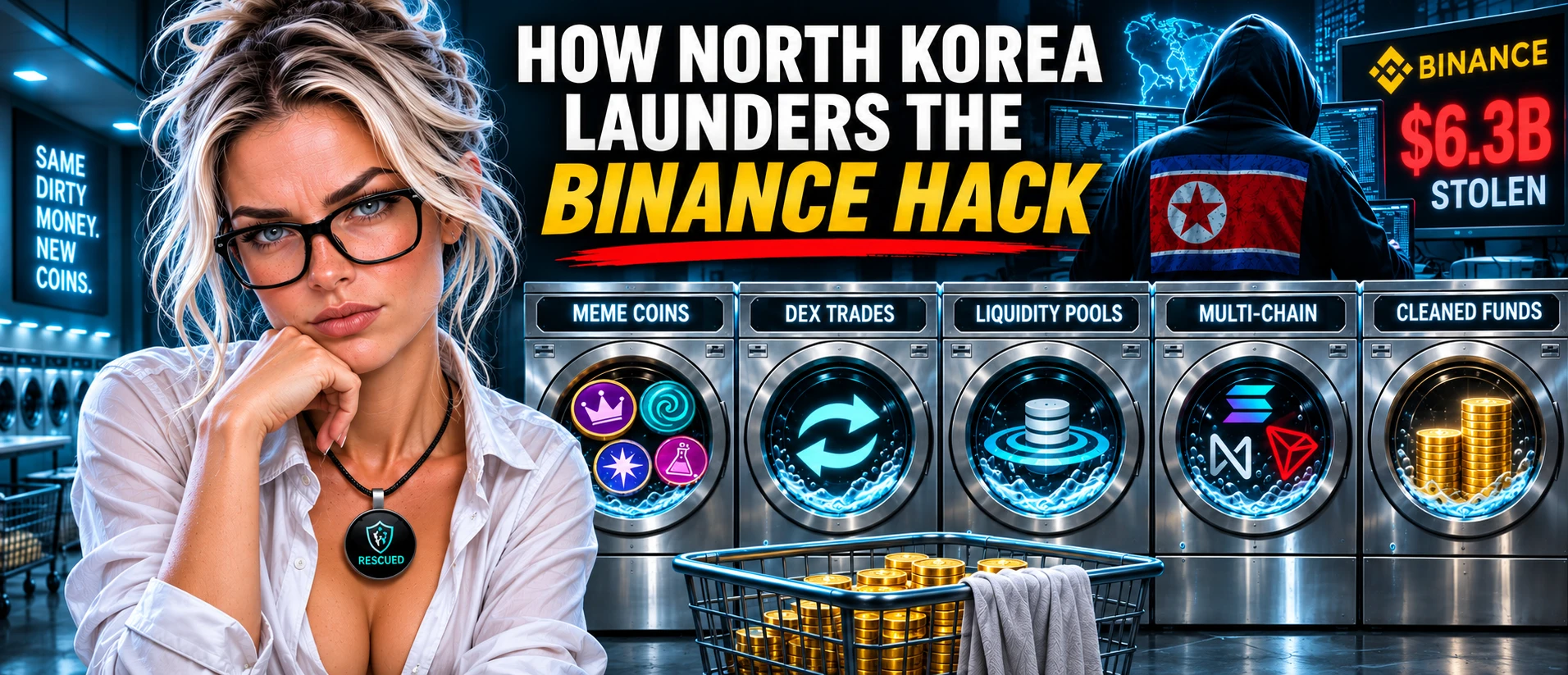
So they got creative. According to Elliptic, the launderers are inventing their own meme coins. A meme coin is a cryptocurrency with no business, product, or purpose behind it, usually named after a joke, a dog, or whatever’s trending. Anyone can create one in minutes for almost nothing, which tells you how much they’re worth.
Then they trade the stolen money through those brand-new coins on decentralized exchanges. A decentralized exchange, or DEX, is a trading site run by software instead of a company with humans. There’s no customer service desk and nobody checking IDs. Trades run through “liquidity pools,” which are shared pots of two coins that the software swaps between automatically.
In plain terms, imagine someone holding a bag of stolen cash. That afternoon they open a fake shop and “purchase” worthless trinkets from it with the stolen bills; now the money looks like store revenue. Then they close that shop and open another one down the street. Each fake coin is a fake shop, and each trade puts another layer between the money and the crime.
The Numbers So Far
This is still early. Elliptic reports that about 117,000 NEAR, a cryptocurrency worth roughly $430,000 in that amount, has already gone through six of these homemade meme coins. Another 11.8 million NEAR, around $43.7 million, hasn’t moved yet. The same pattern is showing up on two other networks, Tron and Solana.
Before anyone panics and sells everything with a Solana logo on it, let me be clear: none of these networks were hacked. The money was stolen from Binance. Tron, NEAR, and Solana are just the roads the thieves are using to drive it away, the same way a getaway driver uses a public highway. Solana in particular is fast, cheap, and crowded with meme coins, which makes it an easy place to blend in. That says a lot about how open it is and nothing about how safe your coins are on it.
Set that against $6.3 billion and you can see this is a long game. They’re testing the pipes before they open the floodgates. If you think you’re patient because you once sat on hold with Social Security, meet North Korea.
Why This Is Your Problem Too
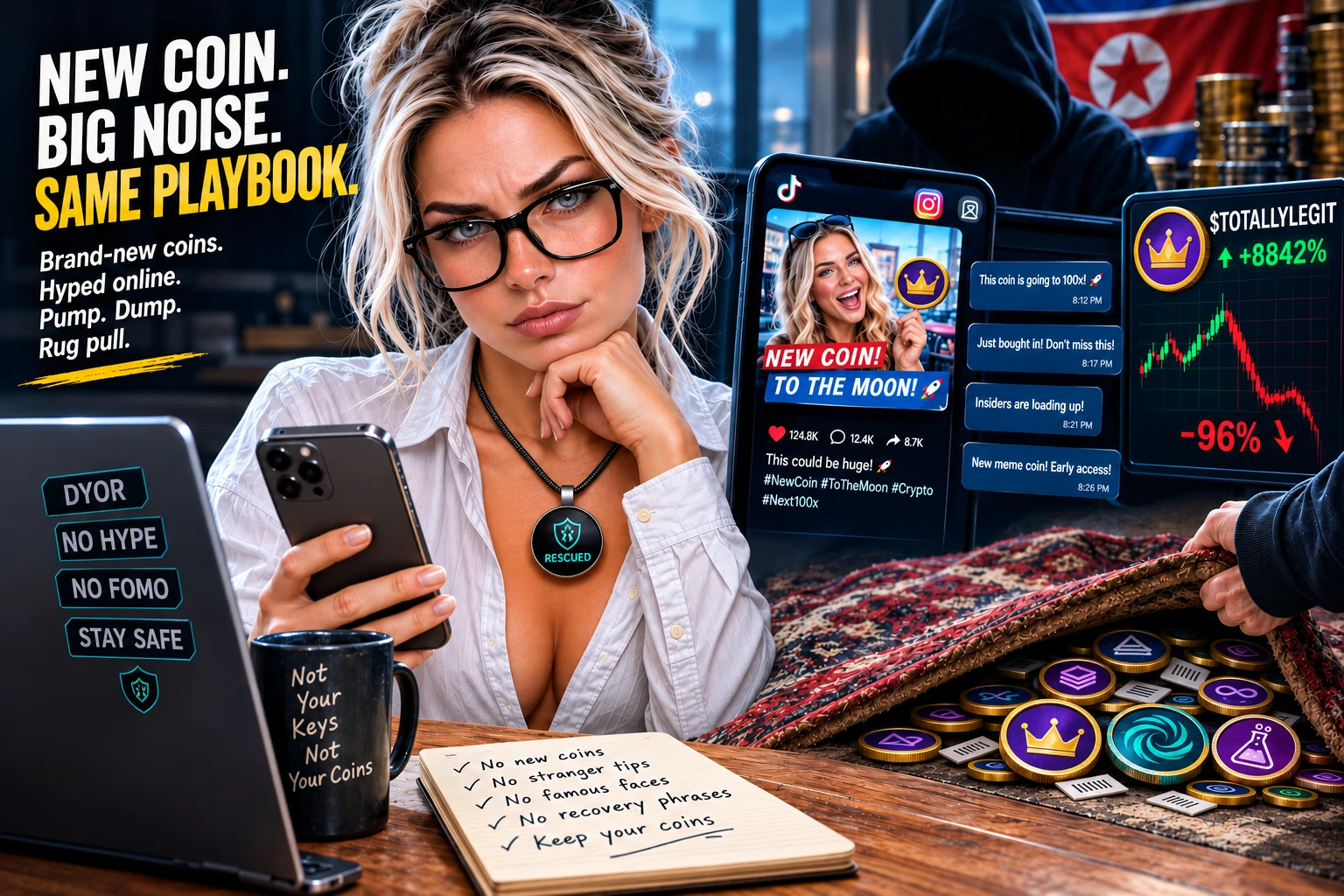
You’ll probably never meet a North Korean hacker, but you will meet their playbook. The tool they’re using to wash money, a brand-new coin with no history, gets used on ordinary buyers every day. Someone creates a coin and hypes it in group chats and on social media. The price climbs while people buy in, and then the creator sells everything and vanishes. That’s called a rug pull, because the rug gets pulled out from under you.
Remember the “Hawk Tuah” girl’s coin in late 2024? It shot up and crashed more than 90% in a matter of hours. She says she never sold, and regulators closed the case. The insiders and trading bots who bought first and dumped on everyone else didn’t need her to be a crook. A famous name on a brand-new coin just means more people show up to be the exit.
So take this from the laundering story: a coin that showed up last week with a lot of noise and no track record isn’t an opportunity. Sometimes it’s a criminal’s laundry machine. If a stranger, an online “friend” or a video with a famous face is pushing a new coin, walk away.
The Real Lesson Is About Where Your Money Sits
This is the part that bothers me most. The hackers didn’t go after Binance out of a grudge. They went after it because that’s where the money was: billions of dollars belonging to millions of customers, all in one place. When you leave crypto on an exchange, you’re one of those customers. You don’t really hold your coins. The exchange holds them and shows you a number on a screen.
The alternative is self-custody, which means keeping your crypto in a wallet you control instead of one a company controls. The safest version is a hardware wallet, a small device about the size of a thumb drive that keeps your keys offline. It isn’t sitting in a giant pile with everyone else’s money, so it isn’t worth a hacker’s time.
I won’t pretend it comes with no strings. With self-custody, you’re the bank. You get a recovery phrase, usually 12 or 24 words, that restores your wallet if the device is lost. Lose those words and nobody can help you, and if you share them, someone can empty your wallet. That’s the tradeoff, and you should know it before you make the move.
Your Five-Minute Checklist
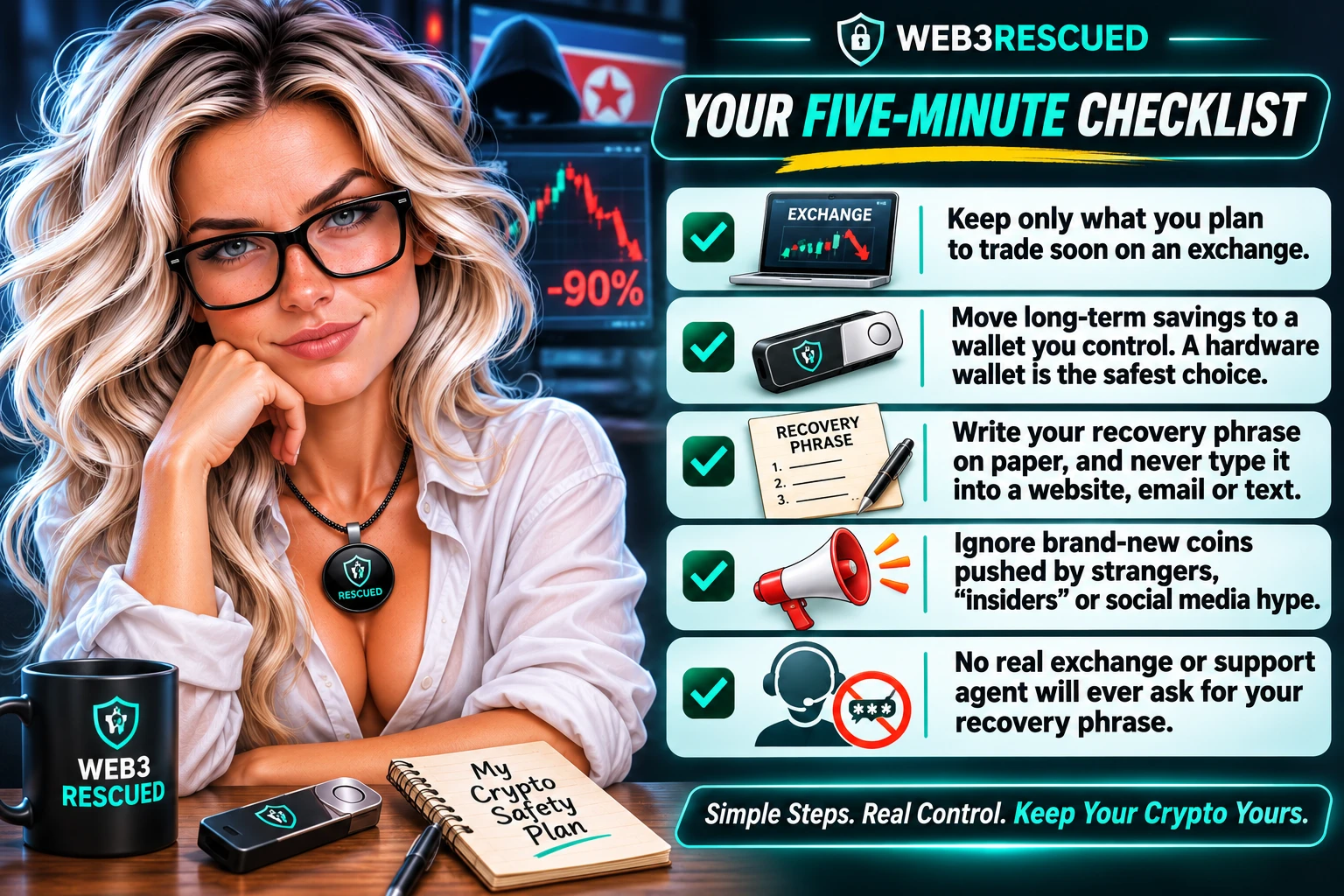
- Keep only what you plan to trade soon on an exchange.
- Move long-term savings to a wallet you control. A hardware wallet is the safest choice.
- Write your recovery phrase on paper, and never type it into a website, email or text.
- Ignore brand-new coins pushed by strangers, “insiders” or social media hype.
- No real exchange or support agent will ever ask for your recovery phrase.
You Were Never Given the Manual
If you’ve left money on an exchange because that’s what everyone told you to do, that doesn’t make you careless. You were following the rules you were handed, and those rules were written for banks with vaults and deposit insurance, not for a world where a keyboard can move $6.3 billion. You are not broken. You are unarmed. Let’s fix that.
Sources
- North Korea is minting meme coins to launder the Binance hack, Elliptic, Nov. 9, 2026
- North Korea denies links to Binance hack as researchers trace stolen billions, CNBC, Nov. 3, 2026
- Hawk Tuah memecoin dumps 90%, Cointelegraph
- ‘Hawk Tuah’ girl says FBI, SEC cleared her of legal wrongdoing, The Block, May 21, 2025