

If you are looking for the deep dive, check out this. This is the post that started it all Voter Hub
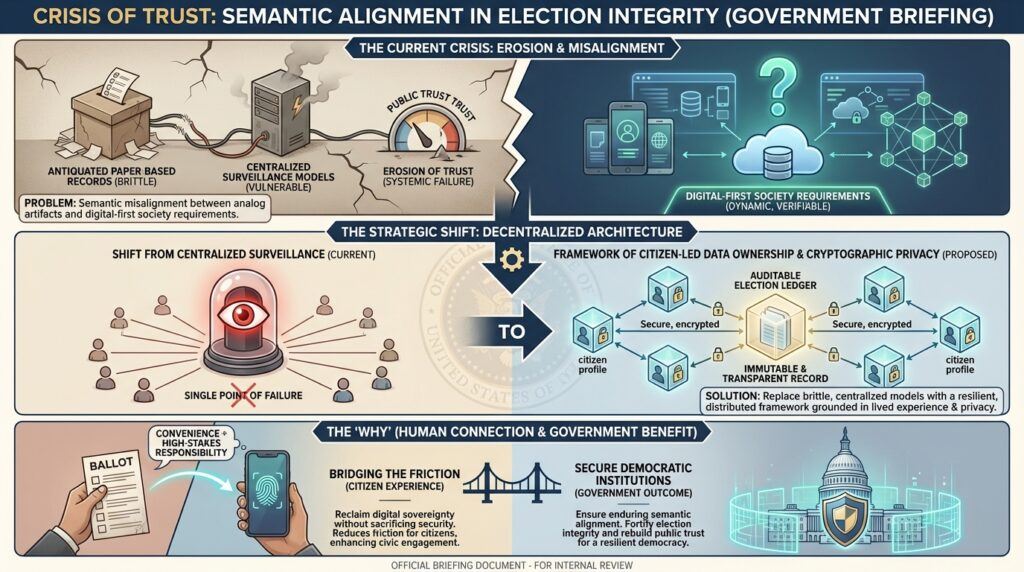
The current erosion of trust in election integrity is a crisis of semantic alignment between antiquated paper-based records and the requirements of a digital-first society. By shifting to a decentralized architecture, we replace brittle, centralized surveillance models with a framework grounded in the lived experience of citizen-led data ownership and cryptographic privacy.
The ‘Why’ (Human Connection): You have likely felt the growing friction between the convenience of the digital world and the high-stakes responsibility of proving who you are at the ballot box. This post bridges that gap, moving beyond the technical jargon to show how we can reclaim our digital sovereignty without sacrificing the security of our democratic institutions.
❌ Problems Addressed:
- The risk of mass data breaches is inherent in centralized government databases.
- Declining public trust caused by outdated and inaccurate voter registration rolls.
- The looming threat of “mission creep,” where a single ID is used for unauthorized surveillance.
- Partisan friction regarding voter verification methods that often disenfranchise or complicate the voting process.
✅ What You’ll Understand:
- How Zero-Knowledge Proofs allow you to prove your eligibility without revealing your private data.
- The Federated Governance model prevents any single agency from controlling your identity.
- A realistic, phased roadmap for moving from conceptual pilots to national infrastructure.
- The distinction between identity infrastructure and voting systems ensures state autonomy.
To build and scale a project of this magnitude, you need a foundation in modern digital marketing and authority-site construction. I recommend Wealthy Affiliate as the premier platform for mastering the communication and business strategies required to bring transformative civic-tech ideas like VoterHub to the forefront of public discourse.
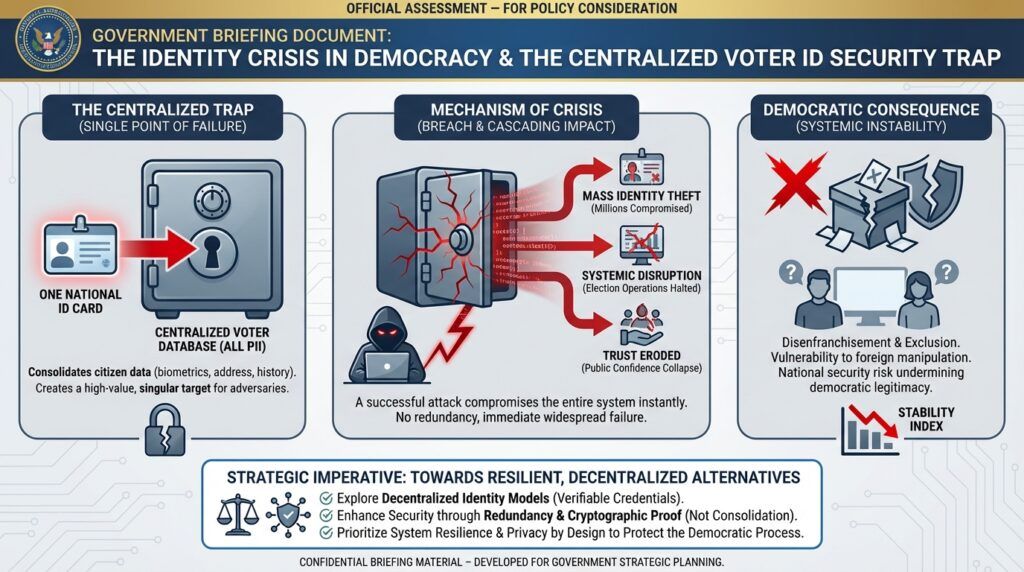
The Identity Crisis in Democracy: Why Centralized Voter IDs are a Security Trap
If you’ve followed my writing about VoterHub, you already know I’m not trying to sell “more tech for tech’s sake.” I’m trying to answer a simple question: how do we fix voter ID and verification in a way normal people can trust? Once the registration system is fixed, we can return to one person-one vote.
Right now, we’re stuck between two bad options. On one side, our current system: messy voter rolls, long lines, paper cards, and a growing sense that nobody really knows who’s properly registered. On the other side, the push toward centralized national digital IDs—systems where one government authority or one big vendor controls the identity layer for everyone. If that sounds like a recipe for overreach and mission creep, you’re not wrong.
VoterHub is my attempt to sketch a third path: A Voter ID that lives with the citizen, not in a single database, and still gives states and election officials what they need to run secure elections.
Don Dixon
What problem are we actually solving?
Forget the jargon for a moment and think about what bothers people:
- People do not trust that voter rolls are accurate—names linger for people who’ve moved or died, others get challenged or dropped incorrectly.
- Voters are told to “just trust the system,” even when news stories highlight hacked databases, mass voter challenges, and sloppy list maintenance.
- At the same time, proposals for new “digital IDs” sound like a surveillance backbone, especially if they’re centralized and can be linked across every part of your life.
So the real problem is not just “modernize voting tech.” It’s:
“How do we tighten up voter verification without handing even more power and data to a single authority?”
That’s the heart of VoterHub.
What is a Decentralized Voter ID, in human terms?
Think of a decentralized voter ID like this:
- Your identity is encrypted, like Bitcoin, but better.
- You have a secure, digital version of your voter ID—stored in your own wallet or app, not on some company’s server.
- When you go to vote (or check in), the system only needs to know: “Are you allowed to vote here, and only once?”
- Instead of exposing your full identity, your wallet proves those facts without spilling everything else.
- No single database contains everyone’s full identity profile.
- No single agency or corporation can quietly change the rules or scan your data for other purposes.
- Different states and institutions can participate, but none of them owns the whole thing.
The “decentralized” part means:
Don Dixon
Behind the scenes, there are cryptographic tools that make this work, but you don’t need to understand the math any more than you need to understand how HTTPS works to use online banking.
How this could start in the real world
This isn’t “flip a switch, and by next November every American is using a brand‑new voting system.” The path to replacing a failed system is phased and deliberate, but the destination is clear.
In plain language, a realistic path looks like:
- A small volunteer group (a university, civic organization, or town) tests decentralized voter IDs in a low‑stakes pilot: people receive an ID and practice “checking in,” but it’s not tied to a real election yet.
- Next, we hammer on verification at scale: can the system handle large numbers of people proving they’re eligible, quickly and reliably, without leaking their personal data or slowing down?
- After that, a small local election runs on VoterHub for identity and access control, while paper ballots (or existing systems) still provide the official tally during the transition.
- If that works and independent audits check out, a state can run a full election cycle on this new identity layer, moving more of the process onto decentralized rails while maintaining verifiable backups.
At every phase, the test is simple: are we increasing trust and usability, and are we doing it without ever handing centralized control of voters’ identities to a single platform, agency, or vendor—on the way to a fully decentralized national voting system?
Why I’m pushing a decentralized approach now
Whether we like it or not, digital identity is coming. The question is not if we’ll see national‑scale digital credentials, but what kind—centralized and opaque, or decentralized and accountable.
I’d rather we build:
- A system where citizens hold their own keys.
- A governance structure in which standards, issuance, and oversight are shared among multiple independent bodies.
- A framework that’s open to review, aligned with existing global standards, and designed to be audited.
That’s what VoterHub is aiming at. My first post introduced the idea and the urgency. The follow‑up laid out the deeper architecture and governance model. This explainer is here to say, in plain language:
- We can modernize voter ID without building a centralized tracking system.
- We can tighten up verification without turning every citizen into a data point in a single master database.
- And we can do it step by step, with pilots and public scrutiny, instead of surprise rollouts.
If this resonates with you—whether you’re a voter, a developer, or someone working in elections—my ask is simple: stay engaged, ask hard questions, and help push for systems that put people, not platforms, at the center of our democracy.
What is a decentralized voter ID system?
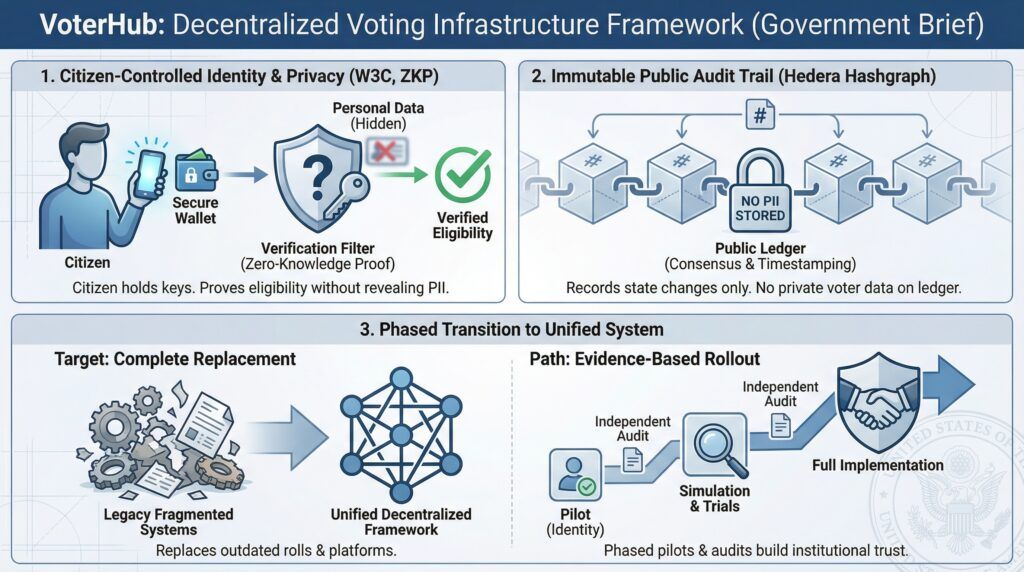
A decentralized voter ID system is an identity framework where individuals hold their own digital credentials and private keys in a secure wallet. Unlike centralized systems, it does not rely on a single master database; instead, it uses W3C standards and blockchain-based consensus to verify eligibility while the citizen retains full control over their personal information.
How does VoterHub protect voter privacy during verification?
VoterHub utilizes Zero-Knowledge Proofs (ZKPs) and selective disclosure to protect privacy. These cryptographic tools allow a voter to prove they meet specific requirements—such as being over 18 or a resident of a specific precinct—without revealing their full name, address, or other sensitive identity attributes to the verifier.
Why is Hedera Hashgraph used in the VoterHub framework?
Hedera Hashgraph serves strictly as an infrastructural layer for consensus and timestamping. It provides an immutable, publicly auditable record of state changes, such as the issuance or revocation of a credential, without ever storing personal or private voter data on the ledger itself.
Will VoterHub replace the existing U.S. voting system?
VoterHub is designed to be a complete replacement for the current, fragmented voting infrastructure. While it begins with a secure identity layer, the ultimate objective is to replace outdated voter rolls and centralized ballot-casting platforms with a unified decentralized voting framework.
How is the transition to a new voting system managed?
The transition is managed through a phased, evidence-based approach that moves from identity-only pilots to simulated voting and local election trials. This allows for continuous independent auditing and public review, ensuring that the new decentralized system earns institutional and public trust before fully replacing legacy infrastructure.